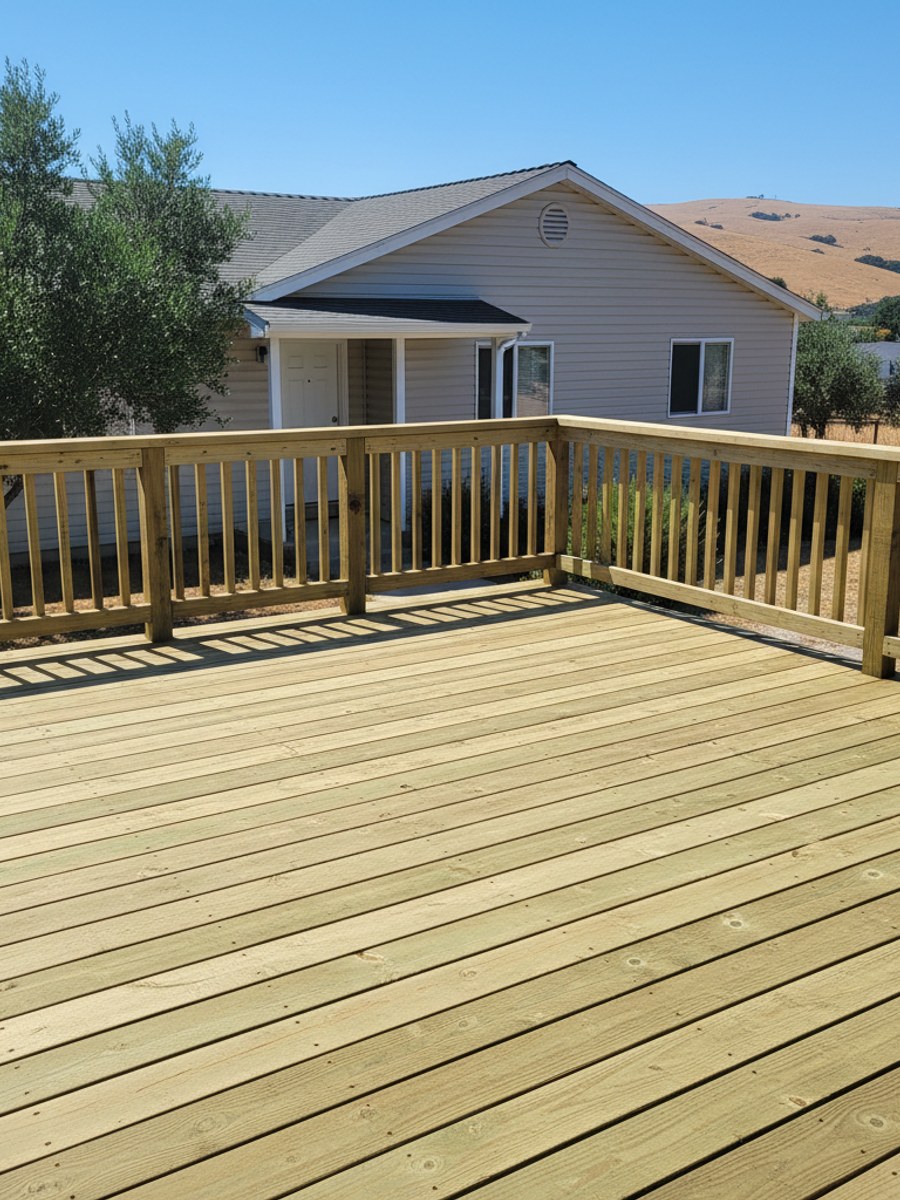
A deck is one of the few home projects where a bad hire doesn't just cost you money, it can cost you a limb. The ledger board that ties a deck to your house takes almost all the load when people are standing on it, and if it's lag-bolted into rim joist without flashing, or worse, just nailed, it can pull away years later with a full deck party standing on it. This isn't a rare story. It's the reason the building code changed the ledger attachment rules back in 2009, and it's the first thing a homeowner should ask about, before color of composite boards or the shape of the railing.
Licensing and insurance, and what to actually ask
In California, deck construction over a certain size or height generally falls under a general contractor's license (B) or a specialty license depending on scope. Don't just ask "are you licensed." Ask for the license number and look it up yourself on the CSLB website, it takes two minutes and shows you if there are complaints, bond status, and whether the license is even active. Ask for proof of workers' comp too. If a framer falls off a ladder on your property and the crew isn't covered, that liability can land on you as the homeowner. A contractor who hesitates on either of these is telling you something.
How permits actually work here
Most attached decks in Folsom need a building permit through the City of Folsom, and if you're just outside city limits, through Sacramento County or El Dorado County depending on which side of the line you sit on. The inspector is going to care about a few specific things: the ledger attachment and flashing, footing depth and size, joist spans and spacing, and guard rail height if the deck sits more than 30 inches above grade. Guard rails need to be at least 36 inches high and the gaps in the balusters can't let a 4-inch sphere through, that's a code detail that trips up a lot of DIY jobs and cut-rate crews alike.
If your lot is in one of the newer subdivisions, Folsom Ranch, Empire Ranch, Broadstone, there's a good chance there's an HOA architectural committee that wants to see the design before you build, sometimes before you even pull the city permit. That review can add two to four weeks. A builder who's worked those neighborhoods before knows to submit early and knows what the HOA usually pushes back on, which saves you a redesign cycle.
What Folsom ground does to footings
The soil around here isn't uniform. Closer to the river and in the older parts of town you'll hit decomposed granite and rock, sometimes within a foot or two of grade, which makes post-hole digging slow and occasionally means switching to a different footing approach mid-job. Further out in the newer development areas you're more likely dealing with clay that expands when it's wet and shrinks hard when it dries out, which is most of our summer. A footing that's too shallow in that clay can heave over a couple of winters, and you'll see it as a deck board that's suddenly higher on one side than it used to be. Code minimum footing depth around here typically runs 12 to 18 inches depending on soil report and local requirement, but a builder who's poured a lot of footings in Folsom clay will often go deeper or use a wider bell-bottom pier without being asked, because they've seen what happens when they don't.
Materials, heat, and the questions a good builder answers without flinching
Summer here runs hot and dry, plenty of days over 100°F in July and August, and that matters more for deck material than most people expect. Composite boards expand and contract with heat, and a builder needs to leave proper gap spacing, usually around 1/8 inch to 3/16 inch between boards depending on the manufacturer, or you'll get buckling by August. Dark-colored composite also runs noticeably hotter underfoot than a lighter color, worth knowing if you've got kids running around barefoot. Pressure-treated lumber is cheaper up front but needs staining or sealing on a schedule, generally every two to three years out here given the sun exposure, or it'll gray and check faster than it would in a milder climate.
Ask any builder you're considering how they handle these specifics. Not "do you use good materials," but what fastener they use for ledger attachment, what gap spacing they run on composite, how deep they're going on footings for your particular lot. A builder who's actually done the work answers in specifics without having to think about it. A builder who's mostly selling gives you a general answer and moves the conversation to price.
What to walk away from
- A bid that's dramatically lower than the others with no explanation. Usually it means no permit, thinner footings, or a ledger board that's just nailed rather than lag-bolted and flashed.
- Anyone who tells you a permit isn't necessary for an attached deck. It almost always is in this area, and skipping it can come back to bite you at resale when the buyer's inspector flags an unpermitted structure.
- No written contract, or a contract with no payment schedule tied to actual milestones. A deposit is normal. Paying most of the job cost before the frame is even up is not.
- A builder who can't tell you roughly how many days the framing will take versus how many days for decking and railing. A single-level deck of average size usually runs somewhere in the range of one to two weeks of actual build time once permits are in hand, weather and inspection scheduling aside. If someone can't ballpark that, they haven't built many.
Older neighborhoods versus newer subdivisions
A deck job on a house in the historic district or one of the older streets off Natoma is a different animal than one in a subdivision built in the last fifteen years. Older houses often have a ledger board and rim joist that were never designed for a deck attachment in the first place, and a builder may need to sister in new framing or add posts independent of the house rather than relying on the ledger at all. Newer construction usually has more predictable framing and, as mentioned, an HOA layer to work through. Neither is harder, they're just different, and a builder who only ever built in one type of neighborhood may be caught off guard by the other.
Take your time picking who does this. Get two or three bids, check the license, and ask the specific questions above instead of general ones. If you want to talk through what your yard and your house actually call for, Apex Deck Solutions is happy to walk the site with you before anything gets signed.